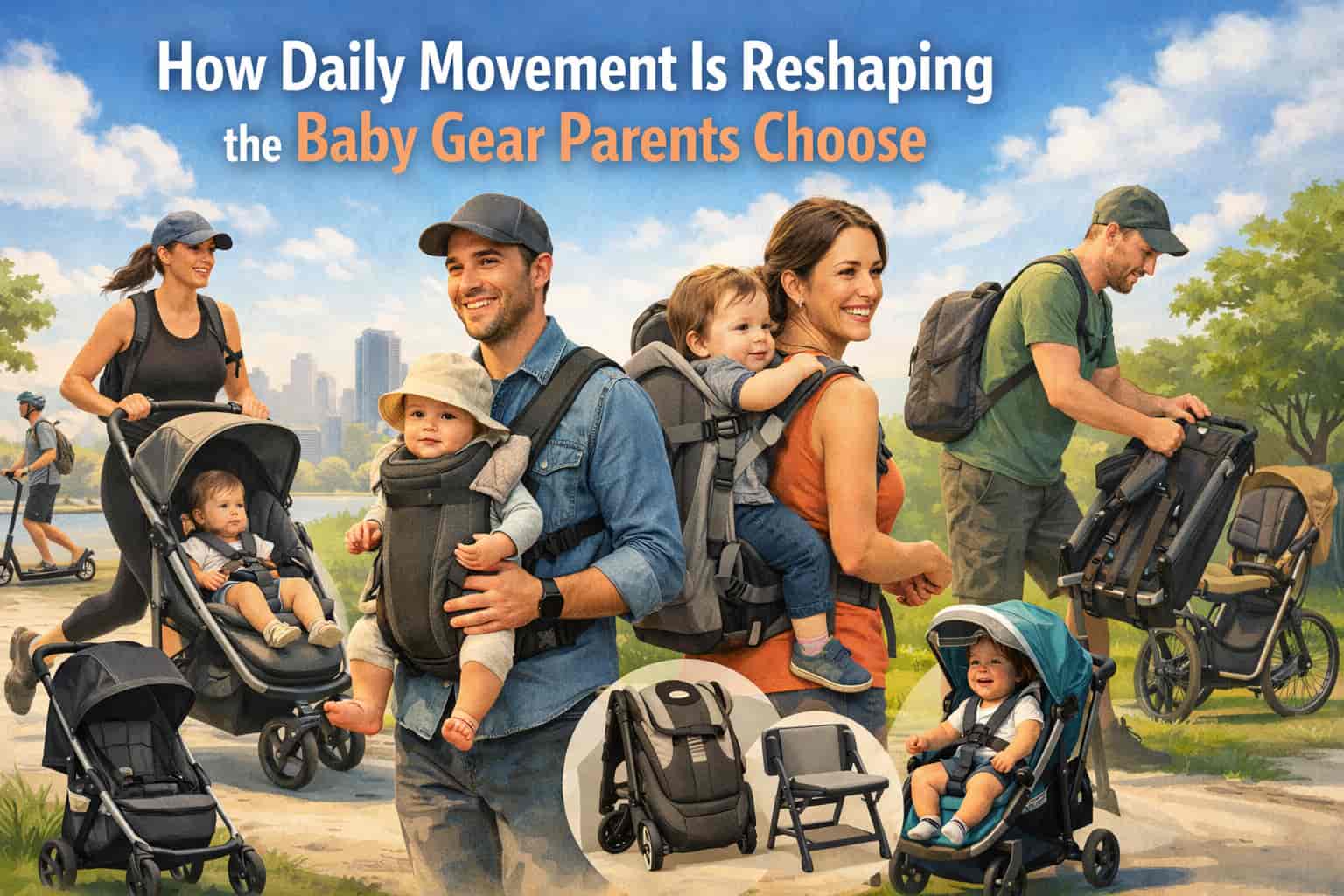
Family life today involves constant movement. Parents step out for grocery runs, evening walks, quick café visits, and short drives more frequently than before. Because of this rhythm, the baby products they choose often need to support everyday mobility rather than occasional use.
In earlier years, baby gear decisions were mostly influenced by product specifications or brand familiarity. Today many parents look more closely at how a product fits into their daily routine. They ask simple questions: Will this make everyday outings easier? Will it remain useful as my child grows?
Strollers are a good example of this shift. During a walk or errand, a stroller becomes the baby’s comfortable space while parents navigate their surroundings. Parents notice whether the stroller moves smoothly, whether it feels stable on different surfaces, and whether it is easy to handle during transitions such as entering a car or storing it at home.
Small functional details can influence the experience significantly. A one-hand fold, for example, allows parents to collapse the stroller while managing other tasks. A balanced frame helps the stroller remain upright when folded, which simplifies storage.
Some strollers today are designed specifically around these everyday moments. The Loopie Hop stroller, for instance, includes a one-hand fold and self-balancing mechanism that helps parents manage quick transitions during daily outings. Features like these often come from observing real parenting routines.
Car travel is another situation where practicality matters. Families frequently move between school runs, grocery trips, and longer drives. Because of this, parents increasingly consider car seats that remain useful across multiple growth stages.
Multi-stage car seats address this need by supporting infants, toddlers, and older children within the same structure. Instead of replacing seats as the child grows, parents can rely on a single system that adapts over time.
Loopie’s multi-stage car seats follow this approach, offering adjustable configurations designed to support children through several years of travel while remaining compatible with common car installation systems.
Ultimately, baby gear today is evaluated through the lens of everyday life. Parents tend to favour products that quietly support movement, simplify routines, and remain dependable across different situations.
When products align with how families actually live and move, they naturally become part of daily life rather than items parents have to constantly manage.