One of the most exciting moments in parenting is hearing your baby say their first word.
For months, you’ve been talking, singing, reading stories, and responding to every coo and babble. Then one day, seemingly out of nowhere, you hear “Mama,” “Dada,” or another meaningful word.
It’s a milestone that many parents eagerly await.
But it also brings questions.
“When do babies start talking?”
“Is my baby talking late?”
“Should I be worried if my friend’s baby is already saying words?”
The truth is that every baby develops differently. Some babies chatter early, while others take their time. Understanding what’s normal can help you enjoy the journey without unnecessary stress.
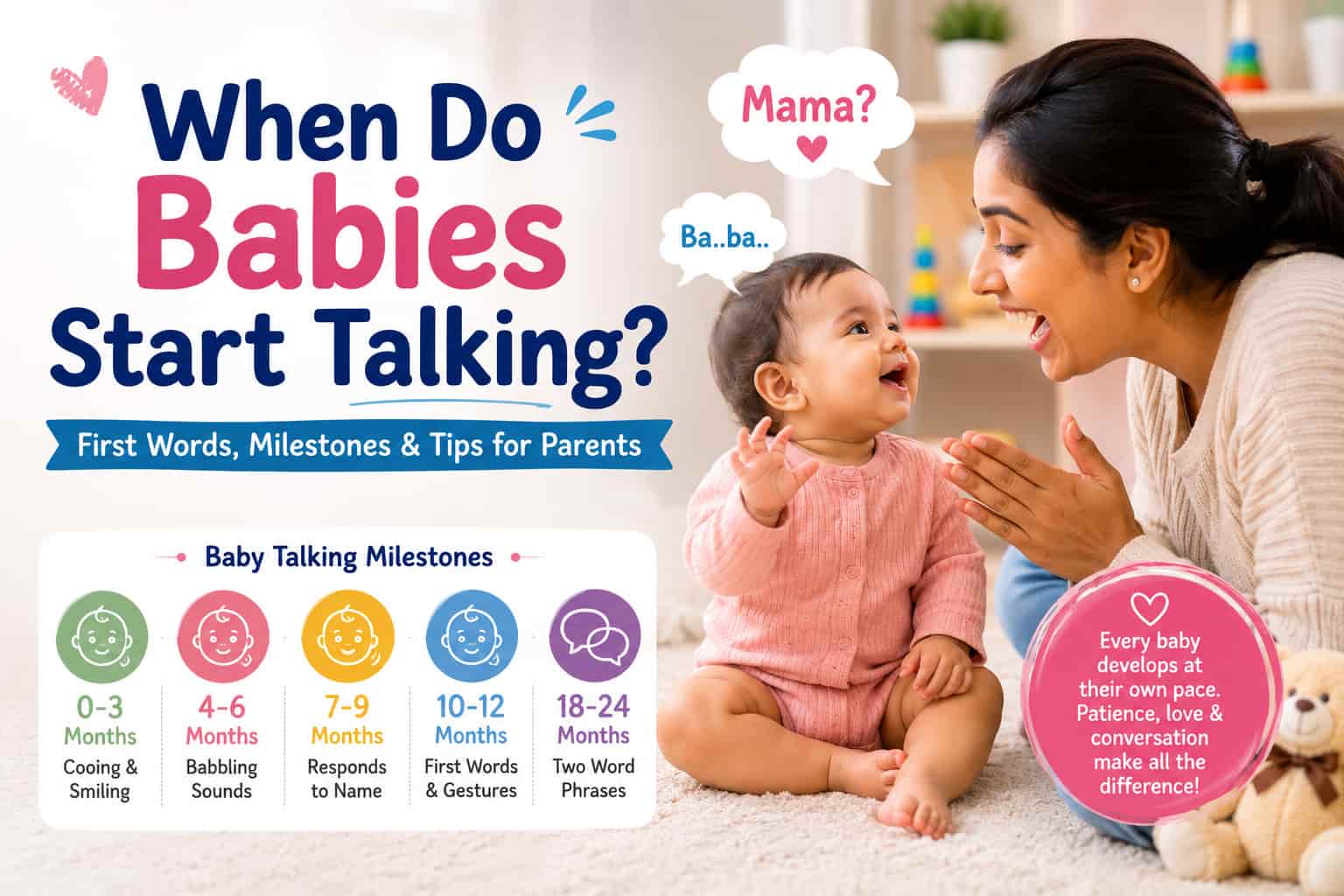
When Do Babies Start Talking?
Most babies say their first meaningful word around 12 months of age.
However, language development starts long before that.
Before speaking actual words, babies communicate through:
- Crying
- Smiling
- Eye contact
- Cooing
- Babbling
- Gestures
These early forms of communication are important building blocks for speech.
So while parents often focus on first words, babies are actually learning language from the day they’re born.
Before Talking Comes Communication
Many parents don’t realize that communication starts months before speech.
Think about your baby.
Before they could sit up, they probably:
- Smiled when they saw you
- Turned toward your voice
- Reached for toys
- Raised their arms to be picked up
These actions are all forms of communication.
Language development isn’t just about talking. It’s about learning how to connect with the people around them.
Baby Talking Timeline: Month-by-Month
Birth to 3 Months
Your baby may:
- Cry differently for different needs
- Recognize familiar voices
- Coo and make soft sounds
- Smile socially
At this stage, babies are learning that communication gets a response.
4 to 6 Months
Many babies begin:
- Laughing
- Squealing
- Babbling simple sounds
You may hear:
- “Ba”
- “Da”
- “Ma”
These sounds are exciting, but they usually aren’t attached to meaning yet.
7 to 9 Months
Communication becomes more intentional.
Your baby may:
- Respond to their name
- Understand simple words
- Use different tones
- Babble longer strings of sounds
Examples:
- “Dadadada”
- “Mamamama”
- “Bababa”
10 to 12 Months
This is when many babies begin saying their first real words.
You may notice:
- Pointing to objects
- Following simple instructions
- Waving goodbye
- Understanding common phrases
Some babies may say:
- Mama
- Dada
- Ball
- Bye-bye
12 to 18 Months
Vocabulary starts growing.
Most babies:
- Learn new words regularly
- Copy words they hear
- Understand much more than they can say
It’s common for babies to understand dozens of words before speaking them.
18 to 24 Months
This period often brings a language explosion.
Many toddlers begin combining words such as:
- More milk
- Mommy come
- Big truck
Their vocabulary can grow surprisingly quickly during this stage.
What Counts as a First Word?
Parents often ask:
“Does ‘Mama’ count?”
The answer depends on whether your baby is using the word with meaning.
For example:
✅ Looking directly at Mom and saying “Mama”
✅ Pointing to a ball and saying “Ball”
These count as words.
However:
❌ Random babbling without meaning
❌ Repeating sounds accidentally
usually doesn’t count as true speech yet.
The key is intention.
Signs Your Baby Is Learning Language
Even before words appear, there are encouraging signs that language skills are developing.
Look for:
- Eye contact
- Smiling during conversations
- Responding to their name
- Copying sounds
- Pointing
- Waving
- Looking where you point
- Enjoying songs and nursery rhymes
These are all positive indicators.
10 Everyday Ways to Help Your Baby Start Talking
The good news?
You don’t need flashcards or expensive programs.
Language learning happens naturally during everyday moments.
1. Talk Throughout the Day
Describe what you’re doing.
“I’m washing the dishes.”
“Let’s put on your shoes.”
Simple conversations help build vocabulary.
2. Read Together Every Day
Even five minutes of reading can make a difference.
Books introduce new words and sounds.
3. Sing Nursery Rhymes
Songs help babies recognize patterns in language.
Popular choices include:
- Twinkle Twinkle Little Star
- Wheels on the Bus
- Old MacDonald
4. Follow Your Baby’s Interests
If your baby is looking at a dog, talk about the dog.
Children learn best when they’re interested.
5. Give Them Time to Respond
After asking a question, pause.
Babies need time to process language.
6. Repeat Words Often
Repetition helps language stick.
“Ball. Yes, that’s a ball. Red ball.”
7. Use Gestures
Wave goodbye.
Point to objects.
Clap together.
Gestures support language development.
8. Play Peekaboo
Simple games teach communication and turn-taking.
9. Limit Passive Screen Time
Babies learn best from real human interaction.
Conversations matter more than videos.
10. Celebrate Every Attempt
Even imperfect words deserve encouragement.
A smile and positive response motivate babies to keep trying.
My Baby Isn’t Talking Yet. Should I Be Worried?
This is one of the most common concerns parents have.
The answer depends on the whole picture.
Ask yourself:
- Is my baby communicating?
- Do they respond to sounds?
- Do they use gestures?
- Are they learning new skills?
Some babies focus heavily on physical milestones first.
They may be busy:
- Crawling
- Standing
- Walking
before language takes off.
Talking in Bilingual Homes: Will Two Languages Cause Delays?
Many families in India and the US speak more than one language at home.
Parents sometimes worry that this might confuse their child.
Research suggests otherwise.
Children can successfully learn multiple languages from an early age.
They may mix words occasionally, but this is a normal part of bilingual development
Common Myths About Baby Talking
Myth 1: Boys Always Talk Later
Every child develops differently.
Gender alone doesn’t determine speech development.
Myth 2: Late Talkers Are Less Intelligent
Not true.
Many late talkers develop normally.
Myth 3: Educational Videos Teach Babies to Talk
Human interaction is far more effective than passive viewing.
Myth 4: Every Baby Says “Mama” First
Some babies say:
- Dada
- Ball
- Dog
- Bye-bye
And that’s perfectly okay.
When Should Parents Seek Professional Advice?
Speak with your pediatrician if your baby:
- Doesn’t respond to sounds
- Doesn’t respond to their name by 12 months
- Uses very few words by 18 months
- Loses previously learned skills
Early support can make a big difference when needed.
A Personal Note for Parents
It’s easy to compare your child with others.
One baby may say ten words at twelve months.
Another may say none.
Social media often makes it seem like everyone else’s child is ahead.
But babies aren’t competing.
They’re learning.
At their own pace.
Celebrate progress, no matter how small.
That first word will come—and when it does, you’ll never forget it.
Final Thoughts
When do babies start talking?
For most babies, meaningful words appear around their first birthday. But language development begins much earlier through smiles, sounds, gestures, and everyday interactions.
The best thing parents can do is talk, read, sing, and connect with their baby regularly.
Remember, every conversation—even the one-sided ones—helps build the foundation for future speech.
And one day, all those words you’ve been sharing will start coming back to you.
FAQs
When do babies start talking clearly?
Most babies say their first meaningful words around 12 months and begin speaking more clearly between 18 and 24 months.
What is usually a baby’s first word?
Common first words include Mama, Dada, Ball, Bye-bye, and Dog.
Is it normal for a 1-year-old not to talk?
Yes. Some babies say words at 12 months, while others begin closer to 15 months.
How can I encourage my baby to talk?
Talk often, read books, sing songs, respond to babbling, and engage in everyday conversations.
Does bilingual exposure delay talking?
No. Children can learn multiple languages simultaneously without causing speech delays.