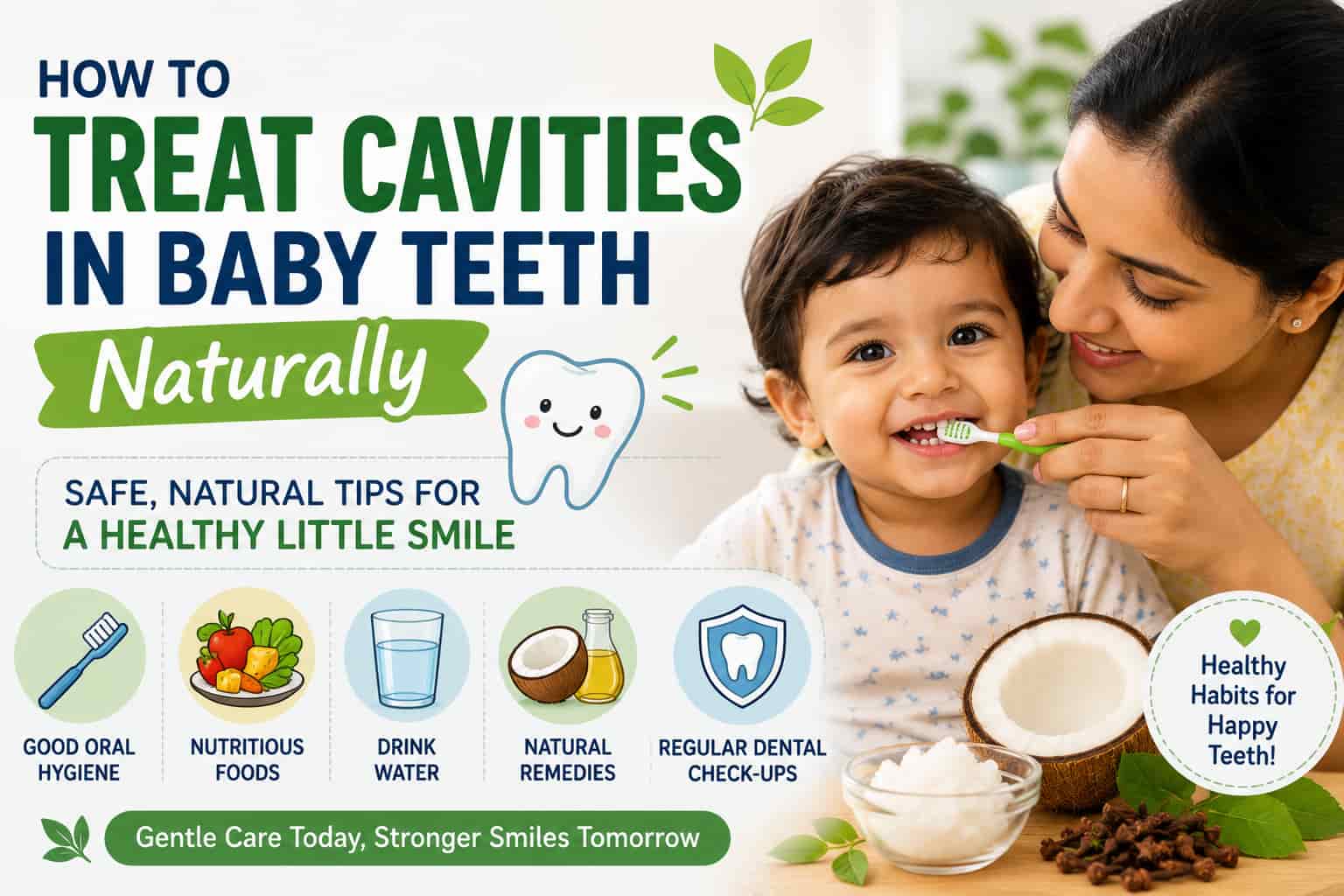
As parents, we celebrate every milestone—first smile, first tooth, and eventually, those adorable little baby teeth that light up every photograph.
That’s why it can be upsetting when you notice a small brown spot, white patch, or cavity on your child’s tooth.
Your first thought may be:
“Can I fix this naturally?”
“Do baby teeth even matter if they’re going to fall out anyway?”
“Can I stop the cavity from getting worse?”
If you’re asking these questions, you’re not alone.
Many parents search for how to treat cavities in baby teeth naturally because they want gentle, safe solutions before considering dental procedures.
The truth is that while some natural habits can help protect teeth and slow early decay, cavities usually cannot be completely reversed once a hole has formed. However, there is a lot parents can do to support healthy teeth and prevent further damage.
Let’s explore what works, what doesn’t, and how to keep your child’s smile healthy.
Why Baby Teeth Matter More Than You Think
One of the biggest misconceptions is that baby teeth aren’t important because they’ll eventually fall out.
In reality, baby teeth play several important roles.
They help children:
- Chew food properly
- Speak clearly
- Hold space for permanent teeth
- Develop healthy eating habits
- Build confidence through smiling
When baby teeth become severely decayed, children may experience pain, difficulty eating, and even infections.
That’s why early care matters.
What Causes Cavities in Baby Teeth?
Cavities develop when bacteria in the mouth feed on sugars and produce acids.
Over time, these acids weaken tooth enamel.
Common causes include:
- Frequent sugary snacks
- Juice or milk before bedtime
- Poor brushing habits
- Prolonged bottle feeding
- Sticky foods that remain on teeth
Even healthy foods can contribute if teeth aren’t cleaned properly afterward.
Can Cavities in Baby Teeth Be Treated Naturally?
This depends on the stage of the cavity.
If It’s Early Tooth Decay
In the earliest stage, you may notice white spots on the tooth.
At this point, strengthening oral hygiene and improving diet may help prevent the decay from progressing.
If a Hole Has Already Formed
Once a cavity creates a visible hole, it generally cannot heal itself naturally.
A dentist should evaluate the tooth.
Natural approaches can still help slow further damage and support overall oral health, but they don’t replace professional treatment.
Natural Ways to Support Healthy Baby Teeth
1. Brush Twice Daily
This sounds simple, but it’s one of the most effective things you can do.
Use:
- A soft-bristled toothbrush
- Age-appropriate fluoride toothpaste
- Gentle brushing motions
Young children usually need parental help brushing properly.
2. Reduce Sugary Drinks
Many parents are surprised to learn that juice can be a major contributor to tooth decay.
Instead of frequent sugary drinks, encourage:
- Water
- Milk during meals
- Fresh fruits instead of fruit juices
3. Offer Tooth-Friendly Snacks
Choose snacks such as:
- Cheese
- Yogurt
- Fresh vegetables
- Apples
- Cucumbers
These foods are less likely to stick to teeth.
4. Encourage Water After Meals
A few sips of water can help wash away food particles and reduce acid buildup.
It’s a simple habit with big benefits.
5. Avoid Sleeping with a Bottle
Milk, formula, and juice can sit on the teeth for hours during sleep.
This is one of the leading causes of early childhood tooth decay.
6. Include Calcium-Rich Foods
Healthy teeth need strong building blocks.
Good options include:
- Milk
- Yogurt
- Cheese
- Leafy greens
- Fortified foods
Common Natural Remedies Parents Ask About
Coconut Oil
Some parents use coconut oil as part of oral care routines.
While it may help reduce certain bacteria, there is no strong evidence that it can cure cavities.
Clove Oil
Clove oil has traditionally been used for tooth discomfort.
However, it should never be applied directly to young children without professional guidance.
Herbal Remedies
Many herbal remedies claim to heal cavities naturally.
Parents should be cautious, especially with toddlers, as safety and effectiveness may not be well established.
Signs a Cavity Needs Professional Attention
Contact a pediatric dentist if you notice:
- Tooth pain
- Visible holes
- Swelling around the gums
- Difficulty eating
- Tooth sensitivity
- Dark brown or black spots
The sooner a cavity is treated, the simpler the treatment often is.
How to Prevent Future Cavities
Prevention is often easier than treatment.
Try these habits:
Establish a Brushing Routine
Make brushing part of the morning and bedtime routine.
Start Dental Visits Early
Many experts recommend a first dental visit by age one.
Limit Sticky Snacks
Foods that stick to teeth for long periods can increase cavity risk.
Make Oral Care Fun
Let children choose:
- Colorful toothbrushes
- Fun toothbrush holders
- Favorite brushing songs
Positive experiences help build lifelong habits.
A Gentle Reminder for Parents
Finding a cavity in your child’s tooth can bring feelings of guilt.
Many parents immediately wonder:
“Did I do something wrong?”
The answer is usually no.
Cavities are incredibly common in children.
What matters most is what you do next.
By focusing on healthy habits, seeking dental advice when needed, and creating a positive oral care routine, you’re already taking important steps to protect your child’s smile.
Final Thoughts
If you’re searching for how to treat cavities in baby teeth naturally, it’s important to understand that natural habits can support oral health and help prevent further decay, but established cavities often require professional dental care.
The good news is that small daily habits—brushing, healthy snacks, water, and regular dental checkups—can make a huge difference.
A healthy smile starts with small steps taken consistently.
And those little baby teeth deserve every bit of care.
FAQs
Can baby tooth cavities heal naturally?
Early signs of decay may sometimes be managed with improved oral care, but cavities that have formed holes generally require dental treatment.
What is the fastest way to stop a cavity from getting worse?
Good brushing habits, reducing sugary foods, and visiting a dentist can help prevent further damage.
Are cavities common in toddlers?
Yes. Cavities are one of the most common childhood health concerns.
Does brushing remove cavities?
Brushing helps prevent cavities and slow early decay, but it cannot repair a cavity once a hole has formed.
When should I take my child to the dentist for a cavity?
If you notice pain, visible holes, swelling, or dark spots on the teeth, schedule a dental visit as soon as possible.