If you’re a parent, you’ve probably spent hours watching your baby and wondering:
“Was that a crawl?”
“Should my baby be crawling by now?”
“Why is my friend’s baby crawling while mine prefers rolling across the floor?”
The truth is, every baby develops at their own pace.
One baby may be eager to move around at six months, while another may wait until nine or ten months. Both can be completely normal.
For many parents, crawling feels like a major milestone because it’s often the first time their little one can move independently and explore the world on their own.
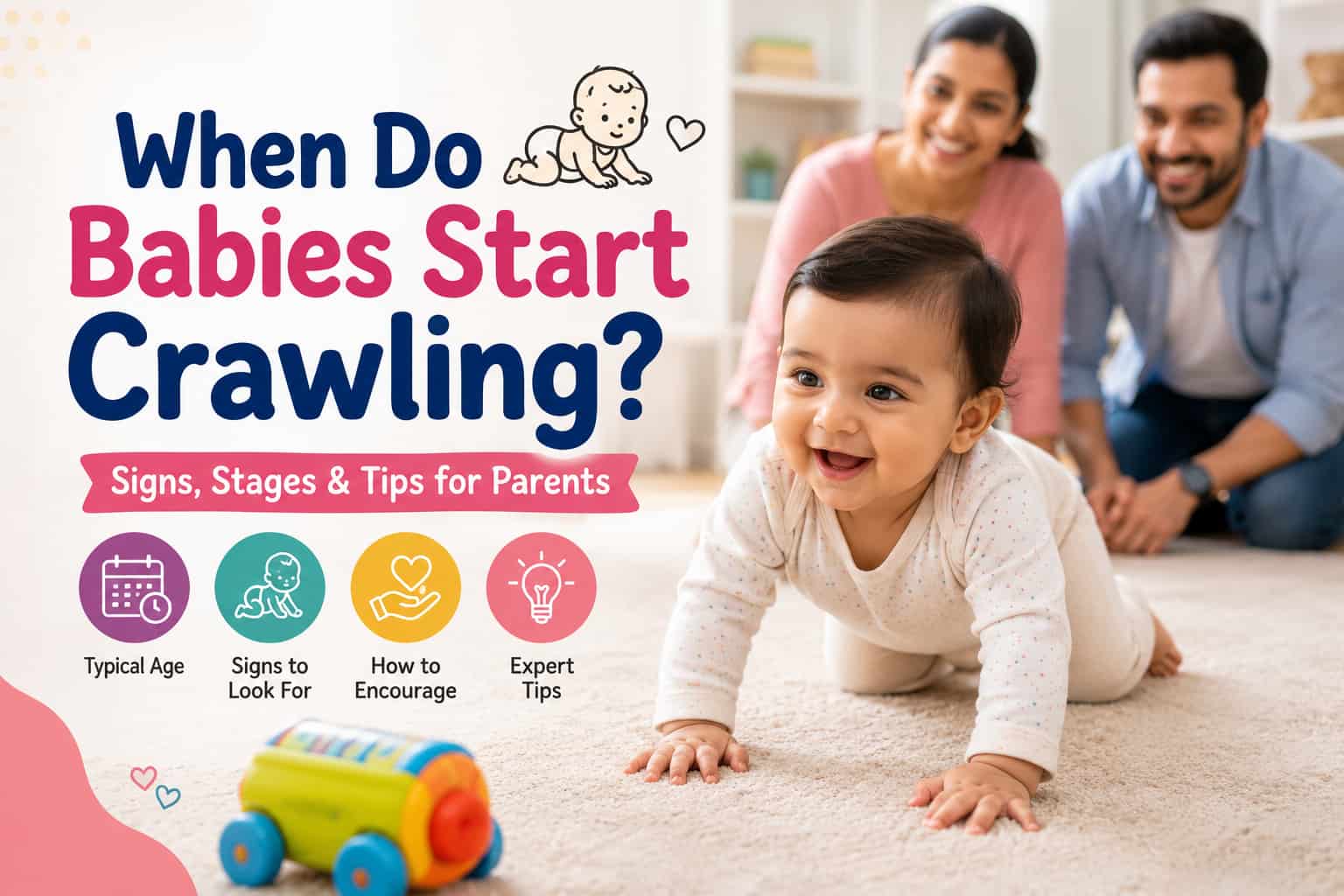
Let’s take a closer look at when do babies start crawling, the signs your baby may be getting ready, and how you can support this exciting stage.
When Do Babies Start Crawling?
Most babies start crawling between 6 and 10 months of age.
However, some babies may begin earlier, while others may take a little longer.
It’s important to remember that there isn’t a single “correct” age for crawling.
Some babies:
- Crawl at 6 months
- Start around 8 months
- Skip crawling altogether
- Move directly to pulling up and walking
Development isn’t a race.
What matters most is that your baby continues learning new movement skills over time.
When Do Babies Learn to Crawl?
Before crawling happens, babies usually develop several important skills.
These include:
- Holding their head up steadily
- Rolling over
- Sitting without support
- Pushing up on their arms
- Strengthening their neck, back, and core muscles
Think of crawling as the result of many smaller milestones working together.
Signs Your Baby Is Getting Ready to Crawl
Many parents ask, “When do babies crawl?”
A better question might be:
“What signs show my baby is preparing to crawl?”
Here are some common clues.
Your Baby Loves Tummy Time
Babies who spend time on their tummy often build the strength needed for crawling.
You may notice them pushing up on their hands and looking around.
Rocking Back and Forth
One of the cutest pre-crawling behaviors is rocking on hands and knees.
Many babies practice this movement for days or even weeks before moving forward.
Moving Backward First
Surprisingly, some babies learn to move backward before they figure out how to go forward.
It’s completely normal.
Reaching for Toys
When babies become motivated to reach objects just out of reach, they often start experimenting with movement.
Pivoting in Circles
Some babies rotate around on their tummy before they begin crawling.
This is another sign that mobility is developing.
Different Ways Babies Crawl
Not all babies crawl the same way.
In fact, some crawling styles can look quite unusual.
Traditional Crawl
Hands and knees move in coordination across the floor.
Army Crawl
The baby pulls themselves forward using their arms while keeping their tummy on the floor.
Bear Crawl
Hands and feet stay on the floor while the knees remain lifted.
Bottom Scooting
Some babies move while sitting and pushing themselves along.
Rolling
Believe it or not, some babies simply roll everywhere they want to go.
All of these can be normal ways of exploring movement.
How to Encourage Crawling
You don’t need special equipment to help your baby learn.
Simple daily interactions often work best.
Give Plenty of Tummy Time
Tummy time helps strengthen muscles needed for crawling.
Start with short sessions and gradually increase the time.
Place Toys Slightly Out of Reach
This encourages your baby to stretch, reach, and move toward the object.
Create Safe Floor Space
Babies need room to practice.
A clean floor with a soft play mat is often all they need.
Join Them on the Floor
Babies love interaction.
Get down on the floor and encourage movement through play.
Celebrate Small Progress
Every little wiggle, reach, and shuffle is part of the learning process.
What If My Baby Isn’t Crawling Yet?
This is one of the biggest worries for parents.
If your baby isn’t crawling at the same age as another child, try not to panic.
Babies develop differently.
Some focus on:
- Sitting first
- Standing first
- Walking earlier
Others spend more time mastering crawling.
Speak with your pediatrician if you have concerns about your baby’s overall development, muscle strength, or movement milestones.
Can Babies Skip Crawling?
Yes.
Some babies never crawl in the traditional sense.
Instead, they:
- Scoot
- Shuffle
- Roll
- Pull themselves up
- Move directly toward walking
While crawling offers developmental benefits, some babies simply choose different paths to mobility.
A Reminder for Parents
It’s easy to compare milestones.
Social media makes it even easier.
You see videos of babies crawling, standing, and walking, and suddenly you wonder if your baby is “behind.”
But babies don’t read milestone charts.
They learn at their own pace.
Your baby’s journey is unique.
Try to focus less on comparing and more on celebrating each new achievement.
Final Thoughts
When do babies start crawling? Most babies begin between 6 and 10 months, but every child develops differently.
Whether your baby crawls traditionally, scoots across the floor, or skips crawling altogether, the most important thing is that they continue learning and exploring the world around them.
Enjoy this stage while it lasts.
Because once they start moving, you’ll quickly discover that nothing in your house is out of reach anymore!
FAQs
When do babies start crawling?
Most babies begin crawling between 6 and 10 months of age.
When do babies learn to crawl?
Babies usually learn to crawl after developing strength through tummy time, rolling, and sitting independently.
Is it normal for a baby not to crawl at 8 months?
Yes. Some babies crawl later than others, and development timelines vary.
Can a baby skip crawling?
Yes. Some babies move directly to standing or walking without traditional crawling.
How can I encourage my baby to crawl?
Provide tummy time, create safe floor space, place toys slightly out of reach, and encourage movement through play.